
A campsite bathroom can be difficult to use long before someone reaches the toilet or shower. A steep path, a heavy door, nowhere to put a walking aid, or a wet floor can turn an ordinary routine into a stressful one. Accessible campsite bathrooms reduce these obstacles so guests with different mobility, balance, strength, and support needs can use the facilities more comfortably and independently.
Accessibility is not one feature that a bathroom either has or lacks. It depends on the whole trip from a pitch or cabin to the facilities, followed by what happens inside. Understanding that full journey helps guests ask useful questions before booking and helps campsite operators identify practical improvements.
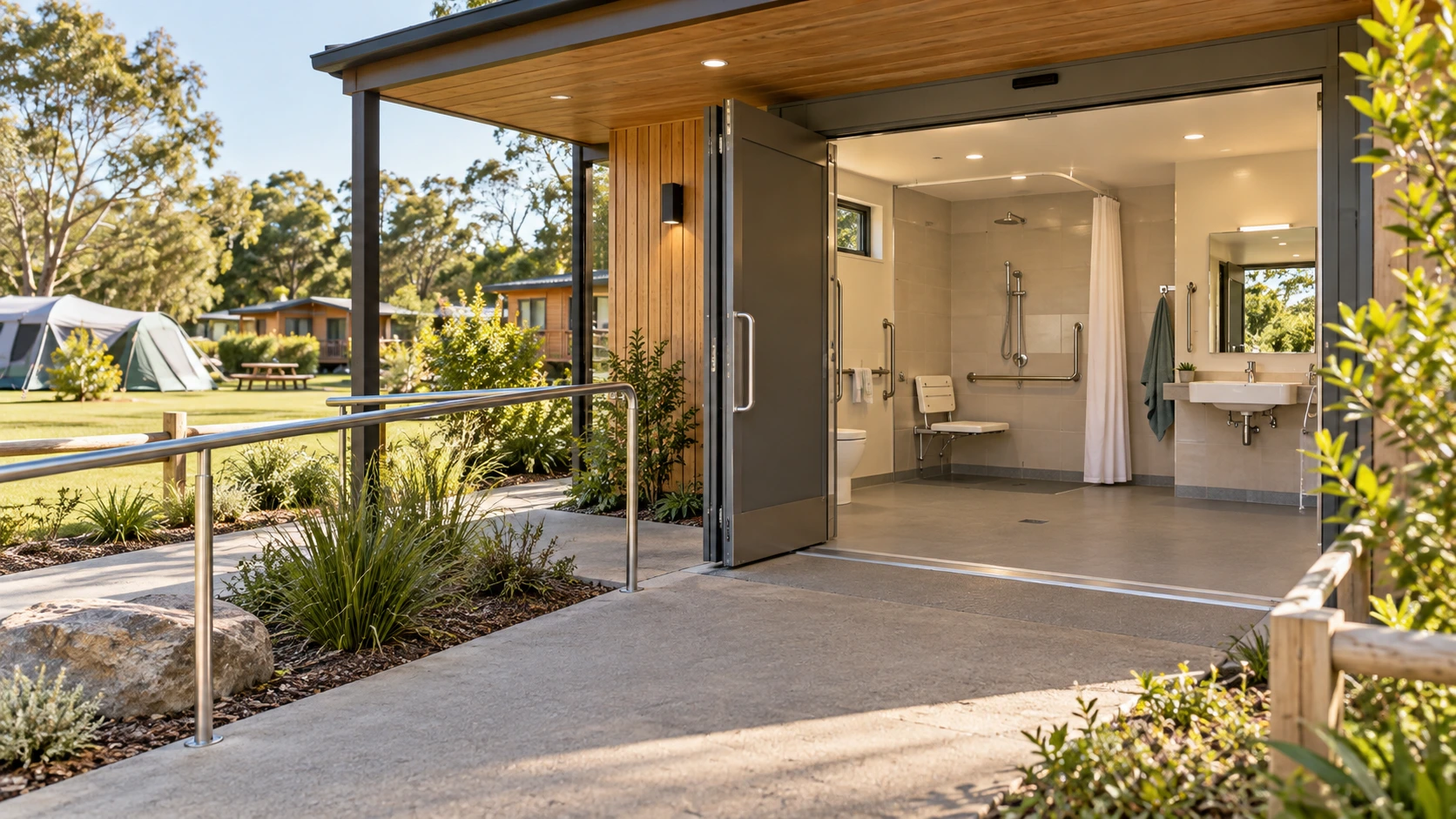
A spacious bathroom is less useful if reaching it involves steps, loose gravel, poor lighting, or a route that becomes muddy after rain. Guests may need to use the facilities early in the morning or during the night, when carrying a torch or negotiating an unfamiliar path adds difficulty. A reasonably direct, firm, and well-lit route can make access easier for wheelchair users, people using walking aids, and anyone who moves slowly or unsteadily.
Distance matters too. A guest may be able to manage a suitable bathroom once inside but find a long trip from their accommodation tiring, especially if they need to make it several times a day. When choosing a pitch or cabin, it is worth asking where the accessible bathroom is and what the route is like. A map alone may not reveal a slope, a gate, or a change in surface.
For example, someone who uses a walker might find a nearby bathroom manageable in daylight but struggle with an uneven path at night. Asking about lighting and surfaces gives a clearer picture than asking only whether the campsite has an accessible bathroom.
Inside the bathroom, enough clear space allows guests to enter, turn, position a wheelchair or walking aid, and close the door. Fixtures should be arranged so they can be reached without awkward stretching or manoeuvring. A door that is difficult to pull open, or that swings into the usable floor space, may make an otherwise roomy bathroom hard to use.
Grab rails can provide support near a toilet or shower, but their location matters. A rail is most useful when a guest can reach it from the position where support is needed. The same applies to hooks, shelves, toilet paper, soap, and controls. Placing everyday items within comfortable reach can spare a guest from standing, bending, or asking for help.
Accessible bathrooms also need to accommodate different ways of using the space. One person may transfer from a wheelchair to a toilet, while another may remain standing but need steady handholds. A guest travelling with a caregiver may need room for two people. No single layout will suit everyone equally, which is why clear information about the actual facilities is more helpful than a simple “accessible” label.
Showers bring several challenges together: water, movement, undressing, and the need to manage belongings. A step-free shower entrance can remove a major barrier for someone who cannot comfortably step over a raised edge. A stable seat may help guests who tire while standing, while a handheld shower head can make washing easier from a seated position.
Controls should be easy to reach and understand, and there should be a practical place to keep dry clothes and toiletries away from the spray. Drainage and floor condition also matter. If water spreads across the room or surfaces become slippery, guests may have to navigate a wet area while dressing or moving back to a chair.
Consider a parent helping a child who needs support while showering. Space beside the shower, a reachable control, and somewhere dry to set clothes each solve a different part of the task. Looking at the shower as a whole reveals more than checking whether it has a seat.
For more detailed information on this topic, read our guide on Why a Campsite with Family-Friendly Facilities Makes Holidays More Enjoyable.
People often need more detail than a list of facility names before they can decide whether a campsite will work for them. Useful descriptions explain the route, entrance, toilet, shower, and available support features. Photographs can help when they show the doorway and the room from more than one angle, including the space beside fixtures.
Guests can ask focused questions based on their own needs:
Answers may vary by bathroom or season, so it helps to confirm which facility is being described and whether it will be open during the stay. Guests should also be able to find out how to report a problem, such as a blocked route or a broken fixture.
Design features only help when they remain usable. Stored cleaning equipment can narrow a turning space. A loose grab rail, faulty light, or door that no longer closes properly can create difficulties even if the original layout was thoughtful. Regular checks and prompt repairs protect the everyday usefulness of the bathroom.
Cleanliness has a practical role as well. Wet floors, overflowing bins, and supplies placed out of reach can interfere with safe, comfortable use. Keeping routes clear and facilities ready is especially important at busy times, when small problems can accumulate quickly.
Accessible campsite bathrooms work best when the route, layout, shower, information, and maintenance fit together. For guests, the most useful step is to match the details of a particular facility to their own needs before arrival. For campsite operators, considering the complete experience can reveal simple barriers that a facility label might overlook.

+44 7973 164208
info@sandiegooversightboard.com