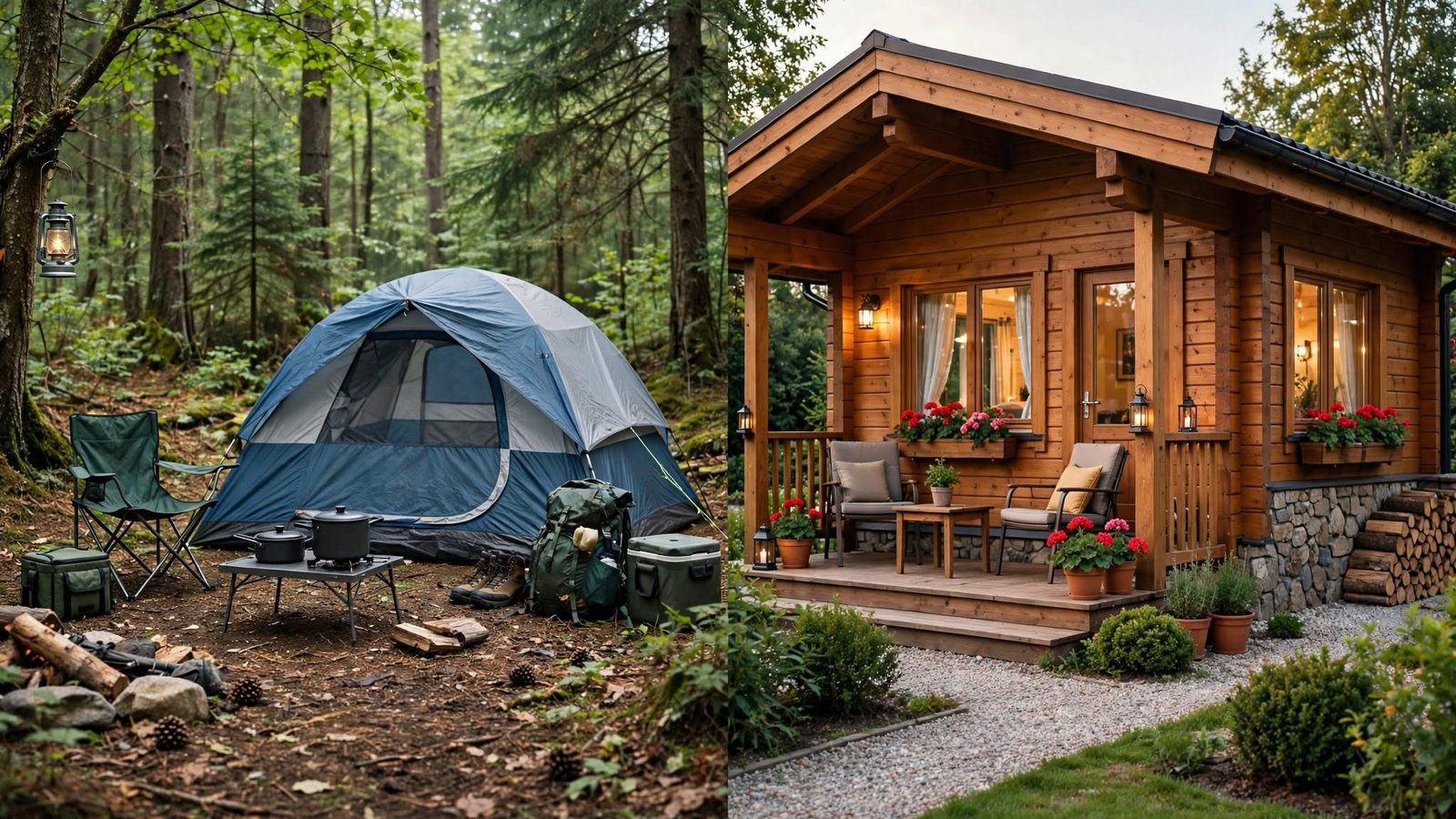

Choosing where to stay can shape almost every part of a holiday, from how much planning you need to how you spend your mornings and evenings. For outdoor-focused trips, the decision often comes down to a campsite or holiday accommodation such as a cabin, cottage, apartment, or holiday home.
Neither option is automatically better. Camping can provide flexibility, outdoor living, and a closer connection to the surroundings, while holiday accommodation usually offers more shelter, privacy, and everyday conveniences. Understanding how these differences affect your particular trip can help you make a practical choice rather than simply selecting the option that looks appealing at first.
Before comparing prices or facilities, think about what you expect from the trip.
If the main purpose is spending time outdoors, cooking outside, exploring nearby trails, or enjoying a slower routine, a campsite may fit naturally. Camping makes the place you visit part of the accommodation experience rather than simply somewhere you return to at night.
Holiday accommodation may make more sense when the priority is sightseeing, visiting family, attending events, or having a comfortable base after busy days. A cabin or apartment can reduce the amount of daily setup involved and provide a more conventional living environment.
The important question is not simply “camping or accommodation?” but how much you want your accommodation to influence the holiday itself.
Comfort requirements vary considerably between travelers. Some people are perfectly happy sleeping in a tent or caravan, while others value a private bathroom, full kitchen, separate bedrooms, and indoor living space.
Campsite facilities differ significantly. Some provide little more than a pitch and shared amenities, while others have electricity connections, showers, laundry facilities, cooking areas, playgrounds, and other services.
You may also need to bring more equipment, depending on your camping setup. Tents, sleeping equipment, cooking supplies, outdoor furniture, lighting, and weather-resistant clothing can all become part of the packing process.
For travelers who already own camping equipment, this may be straightforward. First-time campers should consider the preparation involved before deciding based on the nightly price alone.
Holiday accommodation generally provides more protection from weather and a greater degree of privacy. Depending on the property, guests may have access to beds, cooking facilities, bathrooms, heating, furniture, and indoor areas for relaxing.
This can be particularly useful for longer stays or trips where you do not want to carry substantial equipment.
However, facilities vary between properties. Checking exactly what is included is more reliable than assuming every cabin, cottage, or holiday apartment offers the same amenities.
Budget is often central when choosing between a campsite and holiday accommodation, but comparing only advertised nightly rates can be misleading.
Camping may involve additional spending on equipment, electricity, shower access, laundry, cooking fuel, or other campsite services. Travelers starting without suitable equipment may face higher initial costs.
Holiday accommodation can have its own additional charges or requirements. Depending on the property and booking conditions, you may need to consider cleaning arrangements, linen, parking, deposits, or minimum-stay rules.
Food costs can also influence the overall budget. A holiday home with a kitchen may make self-catering convenient, while campers with suitable cooking equipment can also prepare their own meals.
Compare the expected total cost of the trip rather than one accommodation price.
Weather can make the difference between an enjoyable camping experience and a difficult one.
Tent camping leaves travelers more exposed to rain, wind, heat, cold, and changing ground conditions. Experienced campers can prepare for many of these situations, but suitable equipment and planning remain important.
A cabin, cottage, or similar holiday accommodation provides a more controlled environment when conditions are unpredictable. This may be especially valuable when traveling with people who are less comfortable spending extended periods outdoors.
Check typical seasonal conditions at the destination and consider how you would spend a full day if outdoor plans had to change.
The people joining the trip should influence the accommodation decision.
A couple accustomed to camping may have very different requirements from a family carrying children’s equipment. Similarly, a group of friends may appreciate a holiday home with communal indoor space, while travelers in a motorhome may already have many of the facilities they need.
Consider practical requirements such as:
Sleeping arrangements and privacy
Bathroom accessibility
Cooking and food storage
Space for children or pets
Amount of luggage and equipment
Mobility and accessibility needs
Rather than assuming everyone has the same idea of comfort, discuss expectations before booking.
Accommodation type can affect where you stay.
Campsites are often chosen because they provide convenient access to outdoor surroundings, but their locations vary widely. Some are close to towns and attractions, while others require additional driving.
Holiday accommodation may provide different location choices, including residential areas, town centers, rural properties, and purpose-built holiday areas.
Consider what you plan to do each day. A cheaper stay farther from your activities may lead to more driving, fuel costs, and travel time.
Camping usually involves more active participation. Setting up sleeping areas, organizing equipment, preparing outdoor meals, keeping belongings dry, and packing everything away are part of the experience.
For some travelers, these activities are enjoyable. For others, they can feel like additional work.
Holiday accommodation reduces some of that effort, although guests still need to manage meals, belongings, and any checkout requirements.
This distinction becomes especially important on short trips. If you have only a weekend available, consider how much of it you are comfortable spending setting up and packing away.
The decision does not always have to be strictly between traditional camping and conventional holiday accommodation.
Some holiday parks and camping areas offer cabins or similar accommodation alongside pitches for tents, caravans, and motorhomes. This can suit groups with different comfort preferences while allowing everyone to stay in the same general location.
It can also provide a middle ground for people interested in an outdoor holiday but not ready for tent camping.
Choosing between a campsite and holiday accommodation depends on the experience you want, not simply which option costs less or provides more facilities.
A campsite can suit travelers who enjoy outdoor living, have appropriate equipment, and are comfortable taking a more active role in their stay. Holiday accommodation can be more suitable when privacy, indoor comfort, weather protection, and convenience are higher priorities.
Before booking, compare total costs, available facilities, location, seasonal conditions, equipment requirements, and the needs of everyone traveling. Matching the accommodation to the realities of your trip can make the holiday easier to plan and more enjoyable once you arrive.

+44 7973 164208
info@sandiegooversightboard.com