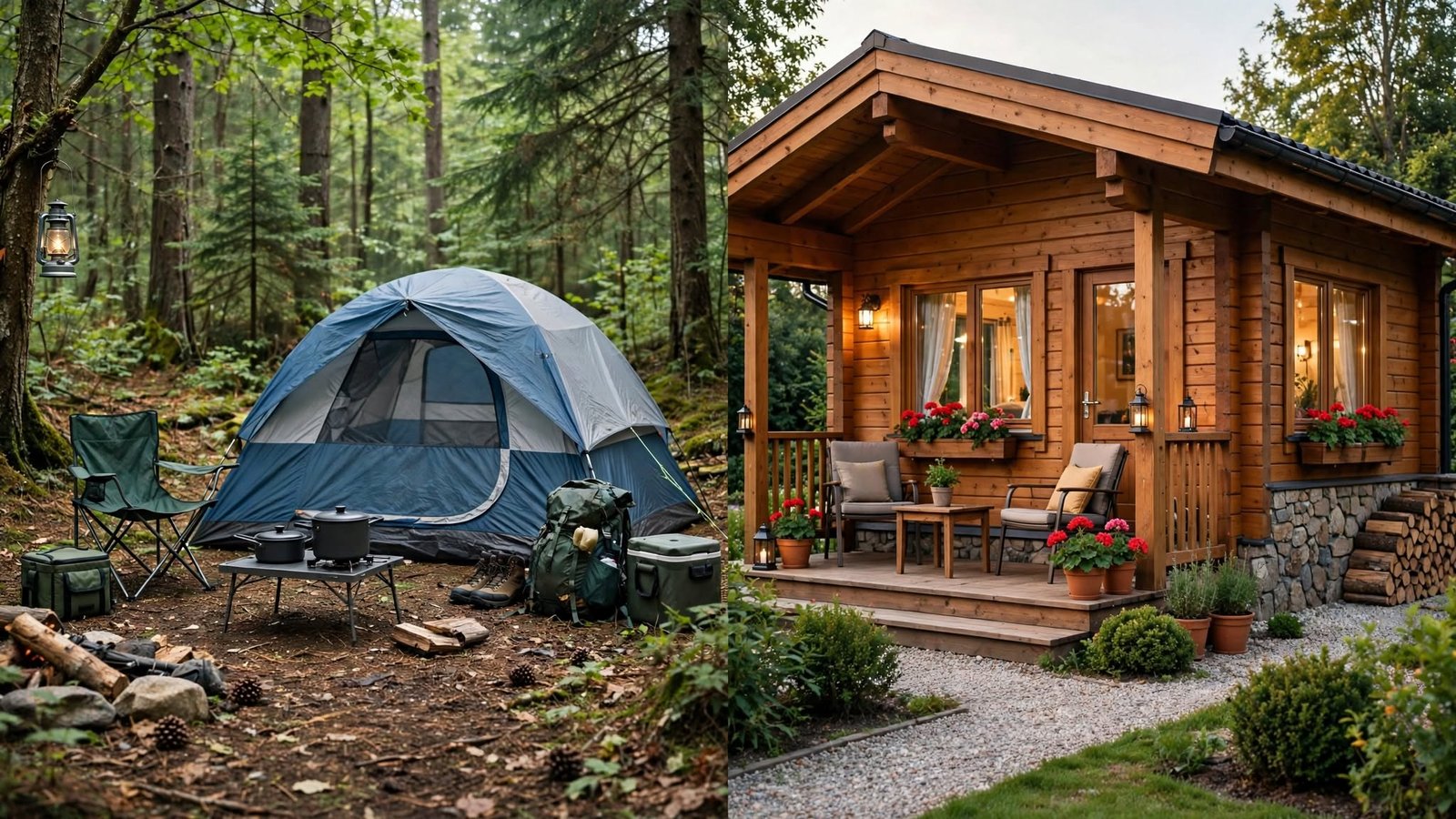

A family camping holiday can offer something that many other trips struggle to provide: time outdoors, a change of routine, and space for everyone to enjoy the break at their own pace. However, travelling with children also brings practical needs that can affect how relaxing the holiday feels.
Choosing a campsite with family-friendly facilities can make everyday tasks easier while giving children more opportunities to play, explore, and meet others. From suitable washrooms to safe recreation areas, the right facilities help families spend less time dealing with practical problems and more time enjoying their surroundings.
A family-friendly campsite is not simply one that allows children. Its layout, services, and shared spaces should work well for adults and younger guests.
The exact facilities vary between locations, but useful features may include family washrooms, baby-changing areas, play spaces, laundry facilities, convenient water points, and clearly organised pitches. Some sites also provide indoor recreation areas or activities that are useful when the weather changes.
The important point is how these features fit the needs of your own family. Parents travelling with a toddler may value accessible washing facilities, while families with older children may care more about sports areas, cycling routes, or nearby outdoor activities.
Camping often involves more daily organisation than staying in a hotel or holiday rental. Meals need to be prepared, clothes and equipment have to be managed, and children still need their normal routines.
Clean, accessible toilets and showers can make a noticeable difference when travelling with children. Family washrooms can be particularly practical when parents need to help younger children without separating the family unnecessarily.
Location matters too. A pitch that is reasonably close to essential facilities can reduce repeated long walks, especially early in the morning or at night. At the same time, some families may prefer not to camp directly beside busy shared areas because of noise and foot traffic.
Children can get through clean clothes quickly during an outdoor holiday, particularly after muddy walks, beach visits, or wet-weather activities. On-site laundry facilities can reduce the amount of clothing families need to pack for longer stays.
Dishwashing areas and accessible water points are equally useful. Small conveniences like these can make cooking and cleaning at the campsite much easier to manage.
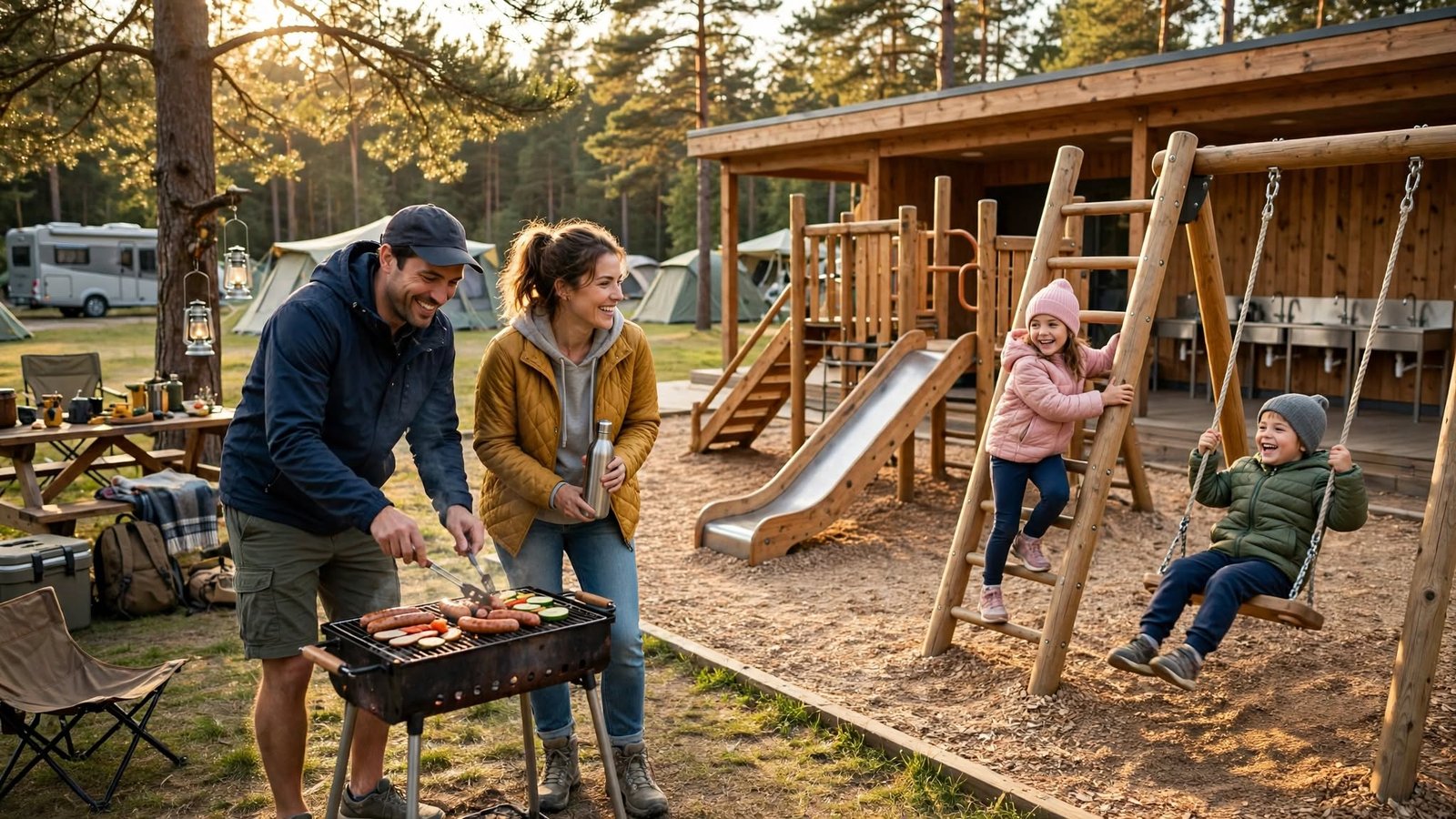
A holiday becomes easier for the whole family when children have suitable places to use their energy. Playgrounds, open grassy areas, games rooms, and sports spaces can provide entertainment without requiring families to leave the campsite every day.
For parents, the design of these areas is worth considering. A playground located where adults can supervise comfortably may be more practical than one hidden at the far end of a large site.
Older children may appreciate table tennis, football areas, cycling opportunities, or spaces where they can socialise. Having several options also helps families with children of different ages.
One advantage of a well-equipped family campsite is that families may not need to plan an outing for every part of the day. Children can spend the morning playing while adults prepare breakfast, relax, or organise the next activity.
This flexibility is particularly useful on longer holidays. Constant sightseeing can become tiring, while having useful facilities at the campsite makes slower days easier to enjoy.
When deciding what type of stay suits your plans, How to Choose Between a Campsite and Holiday Accommodation can also be a useful consideration. Families who enjoy outdoor living and shared recreational spaces may prefer camping, while others may place greater importance on private indoor facilities and additional home comforts.
Weather can change quickly during an outdoor holiday. A campsite does not need extensive entertainment facilities to be useful in poor weather, but having a few sheltered options can help.
A covered seating area, games room, communal indoor space, or sheltered cooking area can give families somewhere to spend time when outdoor plans are interrupted. Nearby walking routes or attractions can also provide alternatives when conditions are unsuitable for the day’s original activity.
Families should still pack appropriate clothing and equipment rather than depending entirely on campsite facilities. Waterproof clothing, extra footwear, warm layers, and simple indoor activities can make unexpected weather easier to handle.
Facilities are only part of choosing a suitable family campsite. The overall layout also matters.
Parents may want to consider vehicle movement around pitches, lighting near shared facilities, paths through the site, access to play areas, and whether ponds, rivers, steep ground, or other natural features are nearby.
Site rules can also affect the experience. Quiet hours, vehicle restrictions, barbecue rules, pet policies, and supervision requirements help explain how the campsite operates. Reading these details before booking can prevent surprises after arrival.
A long list of amenities does not automatically make one campsite more suitable than another. Families should focus on the facilities that match their children’s ages, holiday style, and planned length of stay.
For a short weekend, basic toilets, showers, water access, and a play area may be enough. During a longer camping holiday, laundry facilities, food options, recreational spaces, and sheltered areas may become more important.
It is also worth checking where facilities are located in relation to available pitches. Convenience, noise, privacy, and supervision can all be affected by pitch location.
A campsite with family-friendly facilities can remove many of the small practical difficulties that come with travelling and camping with children. Accessible washrooms, useful washing areas, suitable play spaces, thoughtful site layouts, and sheltered facilities can all contribute to a more manageable stay.
The most suitable campsite is not necessarily the one with the longest list of amenities. It is the one whose facilities fit the way your family plans to spend the holiday. Checking those details before booking makes it easier to choose a campsite where both children and adults can enjoy their time away.

+44 7973 164208
info@sandiegooversightboard.com